PRP Hair Restoration: A Natural Approach to Thicker, Healthier-Looking Hair
Hair thinning can be frustrating, especially when you begin noticing more hair in your brush, shower drain, or on your pillow. For many people, hair loss can also affect confidence and the way they feel about their appearance. The good news is that there are several modern treatment options designed to support healthier-looking hair, and PRP hair restoration has become a popular choice for people looking for a minimally invasive approach.At Bare Beauty, we believe hair restoration should be personalized rather than one-size-fits-all. The right treatment depends on the cause of hair loss, your overall health, your hair-growth pattern, and your individual goals.
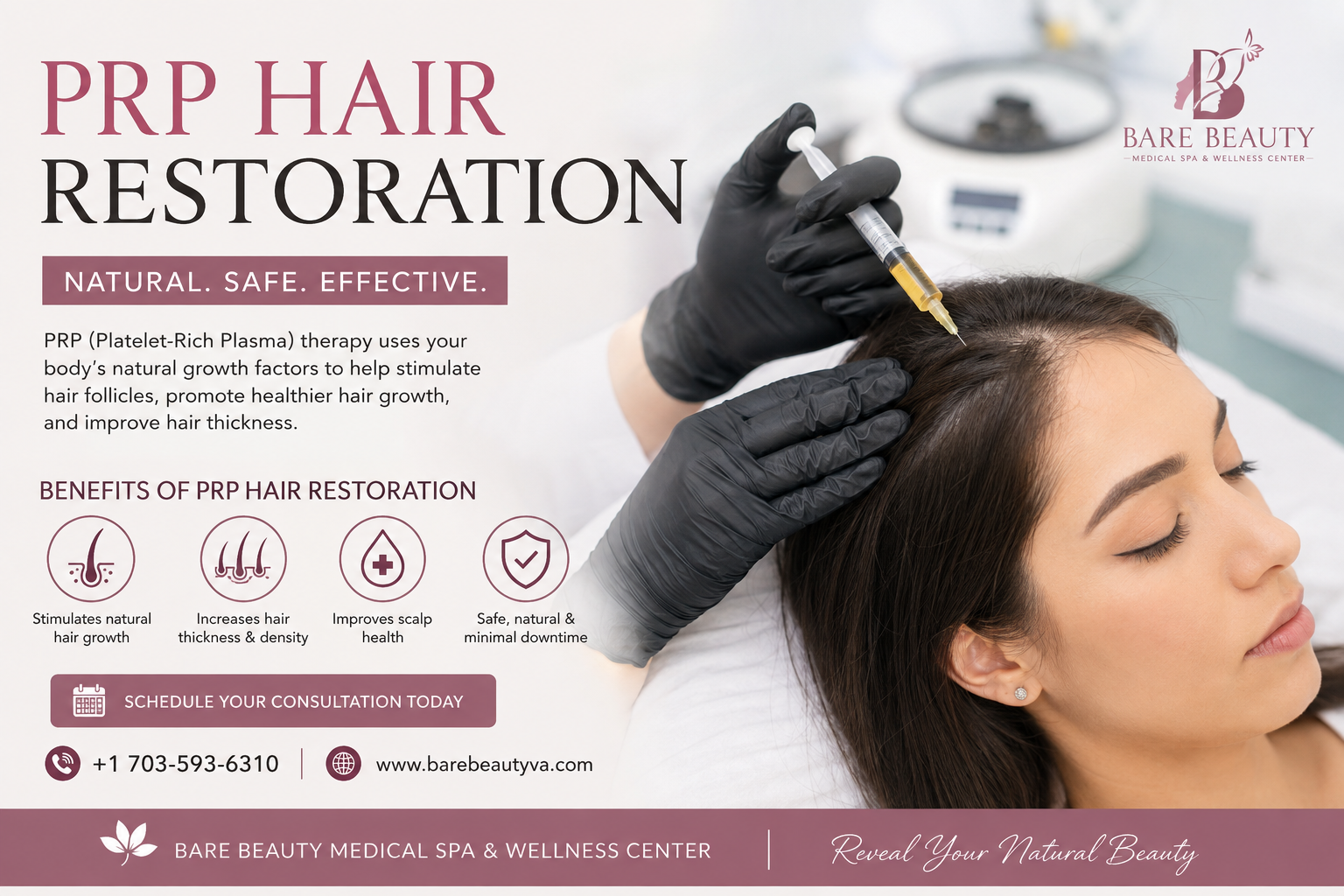
What Is PRP Hair Restoration?
PRP stands for platelet-rich plasma. It is a treatment that uses a concentrated portion of your own blood to support the body's natural healing processes.During a PRP treatment, a small amount of blood is collected and processed to separate the platelet-rich plasma from other blood components. The concentrated plasma is then carefully applied or injected into targeted areas of the scalp.Platelets contain growth factors and other proteins involved in tissue repair and healing. The goal of PRP treatment for hair is to create a supportive environment around the hair follicles and encourage healthier hair growth.Because PRP comes from your own blood, it is considered an autologous treatment. However, that does not mean everyone will experience the same results. A consultation is important to determine whether PRP is appropriate for your particular type of hair loss.
How Does PRP Support Hair Growth?
Hair follicles go through natural growth cycles. When follicles become weaker or spend more time in a resting phase, hair may gradually become thinner and less dense.PRP is intended to support the scalp environment around existing follicles. The growth factors in platelet-rich plasma may help stimulate cellular activity and support the normal hair-growth cycle.It is important to have realistic expectations. PRP is generally intended to improve the appearance and health of existing thinning hair rather than instantly create completely new hair where follicles are no longer active.Results can vary depending on factors such as:
- The cause and pattern of hair loss
- How long you have experienced thinning
- The condition of your scalp and hair follicles
- Age and overall health
- Hormonal or nutritional factors
- Your response to treatment
- Whether PRP is combined with another appropriate hair restoration approach
Who May Benefit From PRP Hair Restoration?
PRP may be considered for adults experiencing certain forms of hair thinning or hair loss, particularly when viable hair follicles are still present.People commonly explore PRP when they notice:
- Gradual thinning around the crown
- Reduced overall hair density
- A widening part
- Early signs of pattern hair loss
- Thinning hair after certain life changes
- A desire to support existing hair follicles without surgery
However, not every type of hair loss should be treated with PRP alone. Hair loss can sometimes be related to thyroid problems, nutritional deficiencies, medications, hormonal changes, autoimmune conditions, stress, or other medical concerns.That is why a proper evaluation should come before treatment.
What Happens During a PRP Treatment?
One of the appealing aspects of PRP is that the treatment process is relatively straightforward.
1. Consultation and Evaluation
Your provider first discusses your concerns, medical history, hair-loss pattern, and treatment goals. The scalp and areas of thinning are evaluated to determine whether PRP may be suitable.
2. Blood Collection
A small amount of blood is drawn, similar to a routine blood sample.
3. PRP Preparation
The blood is processed using a specialized method to separate the platelet-rich plasma from the other components.
4. Scalp Treatment
The prepared PRP is carefully introduced into selected areas of the scalp. The treatment focuses on areas where hair appears thin or weakened.
5. Aftercare
Most people can return to their normal routine relatively quickly, although specific aftercare instructions may vary. Your provider will explain what to avoid immediately after treatment and when you can resume your normal hair-care routine.
Is PRP Hair Restoration Painful?
Everyone has a different level of sensitivity. Some people describe the treatment as mildly uncomfortable, particularly during injections into the scalp.The treatment area can be sensitive, and temporary redness, swelling, tenderness, or bruising may occur. These effects generally improve over a short period.Your provider can discuss ways to make the treatment as comfortable as possible and explain what you should expect before your appointment.
How Many PRP Treatments Are Needed?
There is no universal treatment schedule that works for everyone.A provider may recommend a series of treatments rather than a single appointment, followed by maintenance treatments depending on your response and goals. The exact timing can vary based on your hair-loss pattern, treatment plan, and clinical assessment.It is also important to remember that hair grows slowly. Unlike cosmetic treatments where changes may appear quickly, hair restoration typically requires patience.
When Will You See Results?
Hair growth takes time, so PRP hair restoration should be viewed as a process rather than an overnight solution.Some people may notice changes in hair shedding or texture before they see a noticeable difference in density. More visible improvements can take several months as hair moves through its natural growth cycle.Your provider can help establish realistic expectations based on your starting point and treatment plan.Progress photos can also be useful because gradual changes can be difficult to notice from day to day.
PRP vs. Other Hair Restoration Options
PRP is only one option available for people dealing with thinning hair.Depending on the cause of hair loss, a provider may discuss topical or oral medications, nutritional evaluation, lifestyle factors, scalp treatments, or other hair restoration procedures.For some individuals, combining approaches may provide a more comprehensive strategy.The goal should not simply be to choose the trendiest treatment. Instead, the goal is to understand why your hair is thinning and select an approach that makes sense for your situation.
Hair Restoration Service: A Personalized Approach
A quality hair restoration service should begin with understanding the person behind the hair-loss concern.Two people can have similar-looking thinning but completely different underlying causes. One person may be experiencing hereditary pattern hair loss, while another may have changes related to hormones, stress, nutrition, or another condition.A personalized consultation allows your provider to ask the right questions and determine whether a treatment such as PRP is appropriate.At Bare Beauty, the focus is on creating an individualized experience rather than promising identical results for everyone.
Can PRP Be Combined With Aesthetic Treatments?
Hair restoration and aesthetic care can sometimes be part of a broader wellness and appearance plan.For example, someone visiting a medical aesthetics provider may also be interested in Aesthetic injectables Alexandria, including treatments designed to soften the appearance of certain facial lines.These services have different purposes. PRP for the scalp is intended to support hair restoration, while aesthetic injectables are generally used for specific cosmetic concerns. A consultation helps determine which services may be appropriate and how they can fit into your overall goals.
Understanding Anti Wrinkle Injections
Another popular aesthetic option is anti wrinkle injections.These treatments work differently from PRP. Rather than targeting hair follicles, anti wrinkle injections are designed to temporarily reduce the appearance of certain dynamic facial lines caused by repeated muscle movement.Common treatment areas may include forehead lines, frown lines, and crow's feet, depending on the product used and the individual's facial anatomy.Choosing an experienced medical aesthetics provider is important because facial treatments should be customized to preserve a natural appearance rather than creating an overly treated look.
Why Choose a Professional Hair Restoration Provider?
When you are considering treatment for hair loss, experience and individualized care matter.A professional provider should:
- Review your medical and hair-loss history
- Discuss realistic treatment expectations
- Explain potential benefits and limitations
- Review possible side effects and risks
- Recommend an appropriate treatment plan
- Monitor your progress over time
- Refer you for additional evaluation when necessary
A consultation should feel like a conversation, not a sales pitch. You should have the opportunity to ask questions and understand why a particular treatment is being recommended.
Tips for Supporting Healthier Hair
Professional treatment is only one part of maintaining healthy-looking hair. Everyday habits can also matter.Consider:
Eat a Balanced Diet
Adequate protein, vitamins, minerals, and overall nutrition are important for normal hair growth. If you suspect a deficiency, talk with a healthcare professional before taking supplements.
Manage Stress
Significant physical or emotional stress can affect the hair-growth cycle in some people. Regular exercise, sufficient sleep, and stress-management habits can support overall wellness.
Be Gentle With Your Hair
Frequent heat styling, harsh chemical treatments, and tight hairstyles can contribute to hair damage and breakage.
Pay Attention to Scalp Health
Persistent itching, scaling, inflammation, or other scalp changes should be evaluated rather than ignored.
Seek Help Early
If you notice progressive thinning, getting an evaluation sooner can help identify possible causes and treatment options.
Is PRP Right for You?
There is no single hair restoration treatment that works for everyone. PRP may be a useful option for some people, particularly those with certain patterns of thinning where active follicles remain.The best way to find out whether you are a candidate is to schedule a professional consultation.During the appointment, you can discuss your concerns, expectations, medical history, and available options. If another approach is more appropriate, a qualified provider can help guide you toward the next step.
Conclusion
Hair loss does not have to be something you simply accept without exploring your options. PRP hair restoration offers a minimally invasive approach that uses your body's own platelet-rich plasma to support the scalp and existing hair follicles. While results vary and patience is important, the treatment may be a valuable part of a personalized plan for people experiencing certain types of hair thinning.At Bare Beauty Medical Spa, the focus is on personalized care, realistic expectations, and helping each patient understand the options available for their individual needs. Whether you are exploring hair restoration or considering complementary aesthetic services, a professional consultation is the best place to start.If thinning hair has been affecting your confidence, now may be a good time to learn more about your options and determine whether PRP could fit your goals.
Frequently Asked Questions
1. What is PRP hair restoration?
PRP hair restoration uses platelet-rich plasma prepared from a small sample of your own blood. It is introduced into targeted areas of the scalp with the goal of supporting existing hair follicles and promoting a healthier hair-growth environment.
2. How long does PRP hair restoration take to show results?
Hair grows slowly, so results are not immediate. Some people may notice changes over the first few months, while more visible improvements can take longer. Your individual response depends on several factors.
3. Is PRP suitable for everyone with hair loss?
No. PRP may be appropriate for certain types of thinning but is not a universal treatment for every cause of hair loss. A professional evaluation is important before beginning treatment.
4. Are there side effects after PRP treatment?
Temporary tenderness, redness, swelling, or bruising can occur after scalp injections. Your provider will explain the potential risks and aftercare instructions before treatment.
5. How many PRP treatments will I need?
The number of treatments varies from person to person. A provider may recommend an initial series followed by maintenance treatments depending on your condition and response.
6. Can PRP be combined with other hair restoration treatments?
In some cases, PRP may be incorporated into a broader hair restoration plan. The appropriate combination depends on the cause of hair loss, your health, and your individual treatment goals.
7. Can I receive aesthetic treatments and hair restoration services at the same clinic?
A medical aesthetics practice may offer both hair restoration and cosmetic services, but each treatment has a different purpose. During a consultation, your provider can explain which options may be appropriate for you.
8. When should I seek professional help for hair thinning?
If you notice persistent, progressive, sudden, or unexplained hair loss, it is a good idea to seek professional evaluation. Identifying the possible cause can help determine the most appropriate treatment approach.Bare Beauty Medical Spa
